Get Paid To Promote, Get Paid To Popup, Get Paid Display Banner
Loading
顯示具有 FITNESS 標籤的文章。 顯示所有文章

2010年11月9日 星期二

The Ultimate Exercise For A Rock Hard Body

Do you spend countless hours at the gym working out your pecs, shoulders and biceps and don't pay much attention to your legs? That may be the reason why you are not seeing any increases muscle gains. Most people hate leg days, and rightly so; a good leg workout leaves you exhausted, drenched in sweat and stumbling around like a Valley girl at after one too many drinks. But its exactly that reason, explains Mike Geary author of The Truth About Abs, why you need to do them. In his article below Mike not only explains why leg workouts help you build more upper body muscle and burn fat, but he also tells us the one lower body exercise that can turn your physique into a rock hard body. Check it out.


The Ultimate Hard-Body Exercise

by Mike Geary, Certified Nutrition Specialist, Certified Personal Trainer


As you may have already discovered, the squat is at the top of the heap (along with deadlifts) as one of the most effective overall exercises for stimulating body composition changes (muscle gain and fat loss).  This is because exercises like squats and deadlifts use more muscle groups under a heavy load than almost any other weight bearing exercises known to man.  Squats and deadlifts use hundreds of muscles throughout your entire body to move the load and also to stabilize your body while doing the drill.


Hence, these exercises stimulate the greatest hormonal responses (growth hormone, testosterone, etc.) of all exercises...


In fact, university research studies have even proven that inclusion of squats into a training program increases upper body development, in addition to lower body development, even though upper body specific joint movements are not performed during the squat. Whether your goal is gaining muscle mass, losing body fat, building a strong and functional body, or improving athletic performance, the basic squat and deadlift (and their variations) are the ultimate solution. 


If you don’t believe me that squats and deadlifts are THE basis for a lean and powerful body, then go ahead and join all of the other overweight people pumping away mindlessly for hours on boring cardio equipment. 


Squats can be done with barbells, dumbbells, kettlebells, or even just body weight. Squats should only be done with free weights – NEVER with a Smith machine! My program, The Truth About Six Pack Abs contains the full story on why machines are so inferior and even potentially DANGEROUS compared to free weights.


The type of squat that people are most familiar with is the barbell back squat where the bar is resting on the trapezius muscles of the upper back.  Many professional strength coaches believe that front squats (where the bar rests on the shoulders in front of the head) and overhead squats (where the bar is locked out in a snatch grip overhead throughout the squat) are more functional to athletic performance than back squats with less risk of lower back injury. 


I feel that a combination of all three (not necessarily during the same phase of your workouts) will yield the best results for overall muscular development, body fat loss, and athletic performance.  Front squats are moderately more difficult than back squats, while overhead squats are considerably more difficult than either back squats or front squats. 


If you are only accustomed to performing back squats, it will take you a few sessions to become comfortable with front squats, so start out light. After a couple sessions of practice, you will start to feel the groove and be able to increase the poundage.


To perform front squats:


The front squat recruits the abdominals to a much higher degree for stability due to the more upright position compared with back squats. It is mostly a lower body exercise, but is great for functionally incorporating core strength and stability into the squatting movement. If you're doing front squats right, you'll feel a hard contraction in your abs during these.


It can also be slightly difficult to learn how to properly rest the bar on your shoulders. There are two ways to rest the bar on the front of the shoulders.


In the first method, you step under the bar and cross your forearms into an “X” position while resting the bar on the dimple that is created by the shoulder muscle near the bone, keeping your elbows up high so that your arms are parallel to the ground. You then hold the bar in place by pressing the thumb side of your fists against the bar for support. 


Alternatively, you can hold the bar by placing your palms face up and the bar resting on your fingers against your shoulders. For both methods, your elbows must stay up high to prevent the weight from falling. Your upper arms should stay parallel to the ground throughout the squat. Find out which bar support method is more comfortable for you.


Then, initiate the squat from your hips by sitting back and down keeping the weight on your heels as opposed to the balls of your feet. Squat down to a position where your thighs are approximately parallel to the ground, then press back up to the starting position. Keeping your weight more towards your heels is the key factor in squatting to protect your knees from injury and develop strong injury resistant knee joints.


Keep in mind – squats done correctly actually strengthen the knees; squats done incorrectly can damage the knees. Practice first with an un-weighted bar or a relatively light weight to learn the movement.  Most people are surprised how hard this exercise works your abs once you learn the correct form.


START/FINISH


MIDPOINT


get ripped 6-pack absFor complete descriptions of over 50 of the most effective full body exercises for stripping away body fat while developing a rock-hard body, download my world-famous program - The Truth About Six Pack Abs (used by over 263,000 readers in 154 countries currently).


What's Really In Your Red Bull

Energy drinks have become increasingly popular amongst health minded individuals over the last decade for the extra "kick" they can provide before or during a workout. Not only that but they have become a staple for students wanting to stay up late studying for exams, and even made their way into our everyday lives by being available in office vending machines, and at your favorite bar as an ideal mixer in alcoholic beverages to keep you from passing out all over your friend like a Jersey Shore housemate at 2am in the morning... although I vaguely remember consuming one two many Vodka Red Bulls a few weeks back and still managed to eat the pavement. But whether you are consuming them with your favorite tipple, or as a much needed energy kick at 3pm in the afternoon, do you really spend the time to turn over the bottle to see what's inside? Today we are going to look at the ingredients in a regular Red Bull and why some of those ingredients may not only be detrimental to your health, but can interfere with your quest for a better body.


Sugar

Think energy drinks like Red Bull are better for your waistline than soda? Well they're not. One can of Red Bull has 27 grams of sugar, which is roughly the equivalent of 6 teaspoons. Still not hitting home? Well let's put that into perspective. A Dunkin Donuts Glazed Donut has 19 grams of sugar, Reeces Peanut Butter Cups have 21 grams of sugar, and a Twix Bar has 28 grams of sugar. So you are basically eating the sugar equivalent of a candy bar. The whole can itself only has 110 calories, but all of that is coming from sugar. You could throw 6 teaspoons of sugar in your morning coffee and basically get the same effect for much cheaper.


Sodium Citrate

There are 200 milligrams of sodium in one can of Red Bull, 50 milligrams in a can of diet coke, and 40 in a can of regular coke. 200 milligrams isn't going to kill you, but there are large amounts of hidden salt in many of your foods and beverages. The recommended daily intake is between 1,500 - 2,400 milligrams per day, and currently Americans are consuming up to three times that amount which can lead to high blood pressure, stroke and cardiovascular disease.


Taurine

The next relevant ingredient is Taurine. What is it? It is a colorless crystalline substance that is extracted from the bile of mammals which is found primarily in the lower intestine. Mmmm Yummy! Lucky, or unlucky, for you the Taurine that Red Bull uses is synthetic. Lucky that you aren't ingesting animal intestines, but unlucky that synthetic Taurine has been reported to cause high blood pressure, stroke, seizures and even heart disease. It has been banned in some countries including Switzerland, so why do they throw it in your drink? Well because there isn't enough evidence pointing to the negative effects above, and they rely on the positive research that shows that Taurine is an antioxidant, and provides some health benefits. The problem is that the health benefits associates with its use are from natural occurring Taurine, not the synthetic type.


Glucuronolactone

Michael Pollan has an incredibly eye opening book called Food Rules. In it he talks about how and why we are becoming fatter and illustrates how the food industry has changed for the worse. One of his rules dictates "Don't eat anything with ingredients a third grader couldn't pronounce" and it's a good rule to live by considering most processed and refined food items contain such ingredients. Glucuronolactone doesn't appear to be harmful and has been reported to promote energy. There was a crazy rumor floating around the internet that it was an experimental; chemical that was used in the Vietnam War that was banned because it caused brain tumors, but those rumors are completely false and fabricated.


Caffeine

Where does most of the buzz you get from drinking a Red Bull come from? Well to be honest if you are drinking the regular variety the buzz you are most likely getting is a sugar high, but the energy most likely will be coming from the caffeine. One can of Red Bull contains 80 milligrams of caffeine. Mountain Dew has 55 milligrams, Diet Coke has 45 milligrams and a Starbucks expresso has roughly 58 milligrams. Caffeine is one of those drugs that is constantly getting mixed feedback on from the health community. Some say it has positive effects such as improving reaction time and concentration and even aid in fat loss, while others argue it is addictive, can lead to panic attacks, and pregnant women who consume more than 200 milligrams of caffeine per day are more than twice as likely to experience a miscarriage.


Niacinamide

Otherwise known as Niacin or Vitamin B-3, Niacinamide is one of the better ingredients in Red Bull. It is essentially safe and does have health benefits such as lowering cholesterol however you would have to drink a ton of cans to get any such benefit. Side effects of niacin are rare but have been known to include flushing of the skin and liver damage, but once again it would need to be consumed in large quantities.


Calcium Pantothenate

Otherwise known as Vitamin B-5, and is a water soluble antioxidant that helps break down carbohydrates, fats and proteins. It is also used to treat heart burn which may come in handy as your stomach has to process those 6 teaspoons of sugar you just guzzled down. There are no reported side effects or toxicity, particularly in such low does that are in a can of Red Bull.


What about the sugar free Red Bull? Is that better for you? Well it basically contains all of the standard ingredients found above, but has had the sugar removed and a few other ingredients thrown in;


Acesulfame K

Another ingredient a third grader would find difficult to pronounce. It is a calorie free artificial sweetener that is 180 times sweeter than table sugar and often blended with other sweeteners to mask it's slightly bitter aftertaste. The FDA has approved its use here in the US however some critics believe it could be carcinogenic (causes cancer) however this has yet to proven.


Aspartame

Aspartame is another artificial chemical sweetener and otherwise known as "Equal" or "NutraSweet". Google it and an endless supply of webpages will show up that are devoted to telling you how bad it is and that possible side effects include cancer and brain tumors. The FDA has approved it's use in food and beverages as there is no concrete evidence that this is indeed the case. However there are also other sites show how people who have removed it from their diet have found their health concerns have gone away. Sugar may be bad for your health, but this could potentially be worse. I guess we will have to wait and see.


So there you have it. Ingredients that make up both your regular and sugar free Red Bulls. If you find yourself at a bar and order one with your favorite cocktail, truth is that the alcohol is probably more detrimental to your health. However if you find yourself consuming these on a regular basis to provide you with a much needed energy kick in the afternoon, you may want to consider some healthier options with less chemical additives. It may give you wings, but it could also give you heart disease or even make you fat!

Does Diet Soda Make You Fat?

Are you one of those people that have a diet soda with your meals and think you are being healthy? Perhaps you have sworn off regular soda in recent years because of the high calorie and sugar content you know those beverages are laden with. 


Maybe you want to lose some weight and have switched to diet soda believing you are doing your waistline a favor? The fact is that diet soda has become a staple amongst people who live healthy lifestyles and who watch what they eat. I mean, it is even a staple amongst those who aren't on diets... ever see those people walking out of McDonalds or any other fast food restaurant with a super sized hamburger and fries and a diet coke? It's about as confusing as Kirsty Alley giving weight loss advice. But even though diet sodas are consumed in large quantities in the belief that it contains no calories, recent research shows that it could be actually working against us and may actually be making us fat! That's right, recent research shows that even half a can a day increases your risk of obesity. Let's take a look at why that may be the case.


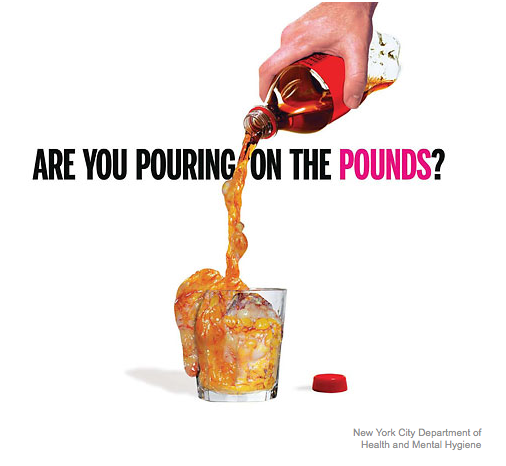
We all know regular soda is bad for us. Plain and simple. If you are still drinking the stuff, I personally think you should order your meal with a side of diabetes because you are drinking more than 10 teaspoons of sugar. Yes, that's right, 10 teaspoons. Soda generally contains anywhere from 35 - 40 grams of sugar per can or small bottle, and 4 grams makes up a teaspoon. Scary huh? It's the equivalent of eating over 80 M & Ms or 31 gummy bears. Not only that, but the type of sugar that they use in soda is generally high fructose corn syrup which in recent studies shows it tends to bypass the body's natural process of burning it for energy, and gets stored straight on your hips and thighs, meaning you can kiss those dreams of fitting into that bathing suit goodbye...


Diet Soda on the other hand contains no sugar, but gets it sweetness from various chemicals or artificial sweeteners, one of the most popular ones used being aspartame which has little to no calories and acts as a sugar substitute. Now there is so much information out there about the side effects of aspartame, some claim it can cause anxiety and depression, others that it can even cause a range of cancers. I'm not going to go into those claims in this post, however we are going to look into why some people believe that it is indeed this artificial sugar, and others, that may be one of the causes that diet soda could actually be making you fat.


A recent study by The University of Texas Health Science Center, San Antonio, took 1550 test subjects, some over weight, some not, and examined the relationship between soda consumption and weight gain. Sharon P. Fowler, MPH, who lead the 8 year study said "What didn't surprise us was that total soft drink use was linked to overweight and obesity. What was surprising was when we looked at people only drinking diet soft drinks, their risk of obesity was even higher". In fact they concluded that for every can or bottle of diet soda that was consumed each day, a participant's risk of being overweight was increased by a whopping 41%. Makes you rethink that diet coke with your salad huh?


About a third of the 622 out of the 1550 participants who commenced the study at a normal weight, ended up becoming obese or overweight. Further to this, the increased risk of becoming overweight or obese for diet soda drinkers was:


- 36.5% increase for every 1/2 can of diet soda consumed each day

- 37.5% increase for every 1/2 to 1 can of diet soda each day

- 54.5% Increase for every 1 - 2 cans of diet soda each day

- 57.1% Increased risk for more than 2 cans of diet soda each day


So what is it in the diet soda that causes weight gain? Well Fowler said that it may not be what's in the diet soda, but in fact what is linked to the consumption of it. What does this mean exactly? Well it could mean a few things which are suspected but haven't yet been confirmed.


One belief is that the artificial sweeteners confuse our bodies and palates. Our bodies taste something sweet and believe it is going to be getting some calories, but when it doesn't it craves what it was expecting and leads us to over eat or consume those wanted calories from other sources.


Another theory is that because people consume a low calorie beverage, they believe they can therefore compensate by eating a little more. "It's ok to get the fries with the burger because I am drinking a diet soda"...


A Purdue University Study where rats fed with artificial sweeteners actually gained more weight, than rats that were fed a diet containing regular sugar. One hypothesis from this study was that the chemical sweeteners may actually alter your body's physiological response by slowing down metabolism. What's more alarming is that these rats weren't just fed straight chemicals; they fed them via artificially sweetened yogurt, raising questions as to whether it may not be just diet sodas that could be causing weight gain, but indeed many other chemically sweetened diet foods also.


But before you go running back to the vending machine to throw in some quarters for a full strength soda, don't forget that it too was undeniably linked to weight gain and obesity. Not only that but there are other non weight related side effects of consuming soda, regular or diet, that can interfere with your fitness goals:


- Causes dehydration: Spending lots of money on creatine supplements in hopes of building your biceps? Your soda may make all that money spent completely worthless

- Osteoporosis: Too much soda is known to suck the calcium out of your bones, leaving them weak and more prone to osteoporosis.

- Tooth Decay: The sugar and chemicals in soda has been linked with tooth decay. What's more is that it can eat away at your tooth enamel, and once that's gone there is no getting it back.

- Caffeine: Anxiety, depression, insomnia... the list of consuming too much caffeine is endless

- Internal Corrosion: It's not just your teeth that get decayed. The chemicals and acids, namely carbonic acid that gives your soda it's bubbles, can eat away at your stomach and digestive linings leading to an array of health issues.

- Heart Burn: It always amazes me when I see people eat junk food and then follow it down with Pepto Bismol. Turns out soda is also a cause of heart burn in some individuals

- Liver and Kidney Damage: Soda has been linked to cirrhosis of the liver and kidney stones and damage.


So what's a healthy boy or girl to do who enjoys drinking soda? Well in my opinion the outlook is bleak. I gave up drinking diet soda a while ago, not because I thought it would make me fat (although now that's just another reason) but for the pure fact that it is simply a cup full of chemicals. Chemicals that our bodies were not meant to consume or digest. And while the research as to whether these chemicals are actually bad for us is lacking, I would rather not run the risk. If you are wanting to lose some weight, or living a healthy lifestyle, then ditch the soda. You wont miss it, and your body will thank you for it.

Are You "Skinny Fat?"

There are a few words and phrases in the English language that when thrown around strike fear into the hearts of many. For men it's great to be lean, but mention "skinny" and it will send them sprinting to the nearest Burger King to down a supersized hamburger and large order of fries. For women, it's great to be curvy and voluptuous, but mention the word "fat" and their next week's meals will consist of lettuce leaves and lemon juice followed by an online subscription to Weight Watchers. Personally, if you mention "Justin Bieber" and "memoir" to me in the same sentence like it was the other day, I can be seen pulling all my eye lashes out, grabbing two beers and inflating my own escape raft to slide off the plane away from the horrible thought of it. Now if you combined the two most hated words for men and women you get "Skinny-Fat", and it's a fairly new phrase that is creating even more anxiety amongst individuals because it's altering us to a new body type, that not only is socially undesirable, but can be an indication of some otherwise unnoticeable health concerns. Let's take a look at exactly what it is, what causes it, and whether you fall under this new term.


Whether someone is socially deemed "skinny" or deemed "Fat" is completely relative. You may have an individual who has high expectations of their body type and classifies themselves as fat, while others may not. People may think someone is too skinny, where as that person may indeed fall into the desired weight range for a healthy individual of their height and age. Either way, our views on the matter are sometimes skewed and biased and sometimes our fears of falling into either category are unwarranted...


But the term "Skinny-Fat" is one that is fairly new and has started appearing on health segments on morning TV shows, creeping into diet and nutrition jargon, and even having multiple definitions under urban dictionary. But with any newly coined term comes some confusion with exactly what it means. There are conflicting meanings, depending on whether you are talking to bodybuilders or diet and nutrition experts, so I have pulled together a few of my favorites;


-Skinny Fat is when someone falls under a healthy weight range, however their body composition is flabby rather than toned

- Someone who appears thin and has a good BMI, but has a high percentage of body fat

- When someone looks lean in clothes, but if flabby underneath

- When a person is thin, but does not eat healthy and eats junk food

- Someone who is thin, but has localized fatty areas, like a muffin top or love handes (hips) or butt and thighs.


So you can see that it is far from a medically diagnosed term, but you get the drift, and I'm sure after reading some of the definitions above, you may know of someone, maybe even yourself (as you lift your shirt and stare at yourself in the mirror) that falls into this category.


So what causes someone to be skinny fat? Well there are numerous causes, based on diet, exercise, and genetics;


1. Diet

A person's diet can be a determining factor of their body composition and whether they are skinny-fat. Diets high in saturated and trans fats, as well as sugar lead to fat storage a flabbier body composition. People who find they can eat a lot of junk food and not get overweight or obese, still may find themselves with fatty areas, such as a belly or muffin top. Those people may also not be aware that although they may not appear to be fat on the outside, they may indeed have large amounts of internal visceral fat, which a more dangerous form of fat that surrounds your internal organs such as your heart.


Individuals, particularly women, who eat a very low calorie diet for extended durations may also fall into the category of skinny-fat. Why is this if they aren't eating man calories? Because when you lower your calories over longer periods of time, your body adapts by lowering your metabolism and holding onto fat.


2. Exercise

Exercise, specifically weight lifting and resistance training, is large contributor to a person's body composition. Men who lift weights tend to have a higher proportion of muscle, than just someone who performs cardio and does not lift weights, which increases fat burning and a more defined body structure. Wider shoulders and larger upper body muscles can also help mitigate the appearance of being skinny-fat.


3. Genetics

Genes also play a leading role in body composition, and some people who fall under the ectomorph body type sometimes find they falling into a skinny-fat category. Ectomorphs are blessed (or cursed, depending on who you are asking) with a fast metabolism, however some have less fast twitch muscle fibers than others, making it more difficult to build muscle. So while they may be lean, they may have "softer" body composition.


Hormones and gender also play a part, with women who finding it harder to put on muscle due to high levels of the female hormone estrogen, then men. Men who have lower testosterone levels because of age or genetics, may also experience a more flabby body composition that ones with normal or higher levels of testosterone.


Being skinny-fat may not be socially undesirable for many, but there are others that because of clothing that cover flatty parts do not mind so much because they all in all seem lean. But there are dangers of being skinny-fat, and some that you definitely need to be concerned about if you fall into this category. Certain areas of fat, specifically belly fat, can cause some health concerns and can be an indication of some serious issues. Dr Gabe Markin, MD says that Belly fat indicates that "your cells are likely to be resistant to insulin,  which puts you at high risk for high blood pressure, diabetes, heart attacks and strokes, and premature death". Excess belly fat indicates that you have excess fat storage in your liver which leads to these problems.


Think you may fall into the category of skinny-fat or have some belly fat you want to get rid of. The bad news is you cannot spot reduce. When fat is burned it is burned from all fatty deposits on your body so you need to develop a holistic approach to losing the flab. So if you are skinny fat, how do you change your body into a healthier more toned composition?


1. Lift Weights: Resistance training builds muscle and burns fat

2. Exercise: Sedentary individuals who do not exercise are more likely to have a higher body fat percentage than those who do not exercise.

3. Diet: Eat whole foods and avoid any processed and refined foods such as white bread, ice cream and candy

4. Avoid sugar: Particularly any products that contain high fructose corn syrup that has shown in studies that because it is so highly refined and processed, by passes our body's natural ability to burn it as energy and is therefore more likely to be deposited as fat


So now you know what it is, and what causes it, are you indeed skinny-fat? Do those two words strike some fear into you when you read them? They should. Not because of what society deems acceptable in terms of being with "skinny" or "fat" but because when the two words are combined, they are an indication of some potential health risks. If you do fall into this category, the good news is you don't have to. Exercise and diet may be all you need to help you change your body composition into something a little healthier and help you lead a happier lifestyle. And if all the above fails and you are still happy to fall into this category, then I have three words for you... Justin. Bieber. Memoir. It's not going to help being skinny-fat, but it sure is scary.

Categories

13STEP (3) 501 (1) A/W 2010 (15) A|X (1) ACCESSORIES (1) APC (1) ARMANI EXCHANGE (1) ARTIST (3) AUTOMNE-HIVER (1) ax (1) BAG (1) BEAUTY (1) BECKHAM (1) BOOK (1) BRAND (1) BUGATTI (1) BURBERRY (2) CALVIN KLEIN (2) DANCE (1) DAVID BECKHAM (1) DIESEL (2) DIOR HOMME (2) DOLCE (1) DUNHILL (1) ECO (1) ES (2) EVENT (1) FASHION (39) FASHIONSHOW (12) FEATURE (3) FERRE (1) FITNESS (5) FOOTWEAR (2) FORD (1) GABBANA (1) GIANFRANCO (1) GIFT (1) GUCCI (1) GUCCI HOMME (2) GYM (4) HM (2) HONDA (1) HUGO BOSS (1) INJURY (1) IPAD (1) jeans (2) KOREAN (1) LAMBORGHINI (2) LANVIN (1) LCEBERG (1) LEATHER (1) LES HOMMES (1) LIFESTYLE (2) LIVING (1) LOUIS VUITTON (2) LV (1) MAGAZINE (1) MANCHESTER UNITED (1) MARC JACOBS (1) MILITARY (1) model (32) MOTOR (7) PAPI (1) PAUL SMITH (2) PEN (1) perfume (1) PRADA (1) RED (1) SEXY (6) SHOE (1) SKINCARE (1) STYLING (3) SWIMWEAR (1) teamm8 (2) TIE (1) TODGER (1) TOPMAN (2) UNDERWEAR (44) VERSACE (1) WALLET (2) WATCH (2) WINTER (10) YSL (1) ZARA (1)
Twitter Delicious Facebook Digg Stumbleupon Favorites More

 
Design by Free WordPress Themes | Bloggerized by Lasantha - Premium Blogger Themes | Bluehost Coupons